With standard email open rates hovering around $20\%$, businesses are battling a wave of inbox fatigue. WhatsApp, on the other hand, boasts open rates consistently above $90\%$ and response rates averaging $30\text{–}40\%$.
However, treats like a high open rate also mean higher stakes. Spamming users on their primary personal chat application leads to blocked accounts and negative brand perception. Converting WhatsApp into a high-ROI revenue channel requires moving away from generic broadcasting and building a conversational lifecycle.
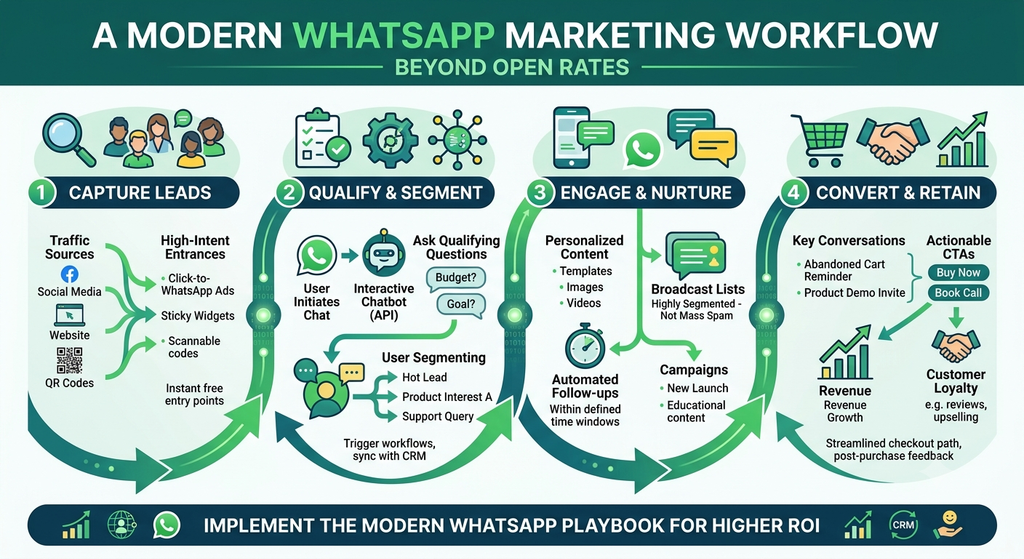
1. Capture High-Intent Leads
A successful strategy begins before a single message is sent. Rather than collecting passive phone numbers via pop-ups, focus on high-intent entry points where users want to open a chat:
- Click-to-WhatsApp Ads: Run Meta ads (Facebook/Instagram) that route directly into a WhatsApp conversation. When a user initiates a chat through these ads, Meta provides a 72-hour free messaging window, reducing message costs while capitalizing on active interest. Zoko
- Website Dynamic Widgets: Replace traditional contact forms with “Chat on WhatsApp” buttons pre-populated with intent-driven text (e.g., “Hi! I’m interested in the Pro Plan”).
- QR Codes on Physical Touchpoints: Use dynamic QR codes on product packaging, receipts, or offline collateral to drive post-purchase onboarding or customer loyalty sign-ups.
2. Automate Lead Qualification with Hybrid Workflows
The first five minutes after an inquiry determine whether a lead converts. Deploy a hybrid automation model using the WhatsApp Business API:
Automate Business
[Inbound Inquiry] ──> [Interactive Chatbot] ──> [Qualifying Questions]
                                                       │
                           ┌───────────────────────────┴───────────────────────────┐
                           ▼                                                       ▼
                [Hot Lead: Instant Handoff]                             [Warm Lead: Nurture Sequence]
             (Route to live sales rep via CRM)                     (Send interactive educational media)
- Interactive Buttons: Use Quick Replies and List Messages instead of plain text. Reducing typing friction increases completion rates for qualification flows.
- CRM Integration: Sync your WhatsApp API with platforms like HubSpot, Salesforce, or Zoho. Store chat history, update deal stages, and trigger automated follow-ups based on customer tags.
3. Master Hyper-Segmented Broadcasts
Broadcasting a single promotional blast to your entire contact database lowers message quality scores, which risks account throttling. Divide your list based on transactional behavior:
Zoko
| Audience Segment | Trigger Event | Content Strategy |
|---|---|---|
| Cart Abandoners | Items left in cart > 1 hour | Send a dynamic template with the exact item image, a limited-time incentive, and a “Checkout Now” button. |
| Post-Purchase | Order delivered | Provide a quick video tutorial on product setup, followed by an automated review request 5 days later. |
| Lapsed Buyers | No activity > 60 days | Deliver a targeted restock notification or product recommendations based on past purchase history. |
4. Key Metrics to Track (Beyond Open Rate)
While high deliverability is a baseline benefit, track business-level performance to gauge ROI:
- Click-Through Rate (CTR): Measures how compelling your CTA buttons and interactive elements are.
- Chat-to-Conversion Rate: The percentage of initiated conversations that result in a booked demo, completed form, or purchase.
- Template Quality Score: Monitored directly in Meta Business Manager; a falling score indicates high user block/report rates.
- Cost Per Acquisition (CPA): Factors in Meta API utility/marketing message costs alongside platform management fees. Zoko