The Death of the Scroll-Stop: Why Short-Form Video Captured the Internet (and How to Win It)

There was a time when a well-composed photo or a clever 280-character post was enough to capture the internet’s attention. That era is officially behind us. Today, online feeds are driven by vertical, bite-sized, high-tempo video content. Platforms like TikTok, Instagram Reels, and YouTube Shorts have fundamentally rewritten the rules of digital consumption. Short-form video isn’t just a content format anymore; it’s the primary language of the web. Why Short-Form Video Is Winning The transition from static posts to vertical video didn’t happen by accident. It is the result of evolving consumer behavior paired with algorithmic shifts. Platform Battleground Platform Key Strength Best Suited For TikTok Virality, cultural trends, raw authenticity Community building & organic reach Instagram Reels Aesthetic visual appeal, direct product integration Brand positioning & converting existing followers YouTube Shorts Evergreen searchability, long-term channel growth Tutorial snippets & driving long-form views The Anatomy of a High-Converting Short Video To capture and hold attention in today’s feed, creators and brands build around three core elements: The Takeaway Short-form video is no longer an optional marketing channel. Whether you are an individual creator, a startup, or an enterprise brand, learning to tell compelling stories in 30 seconds or less is the single most valuable digital skill today. Stop waiting for the perfect camera setup. Grab your phone, hit record, and lead with value from the very first frame.

The Death of the Scroll-Stop: Why Short-Form Video Captured the Internet (and How to Win It) Read More »

Beyond Open Rates: The Modern WhatsApp Marketing Playbook

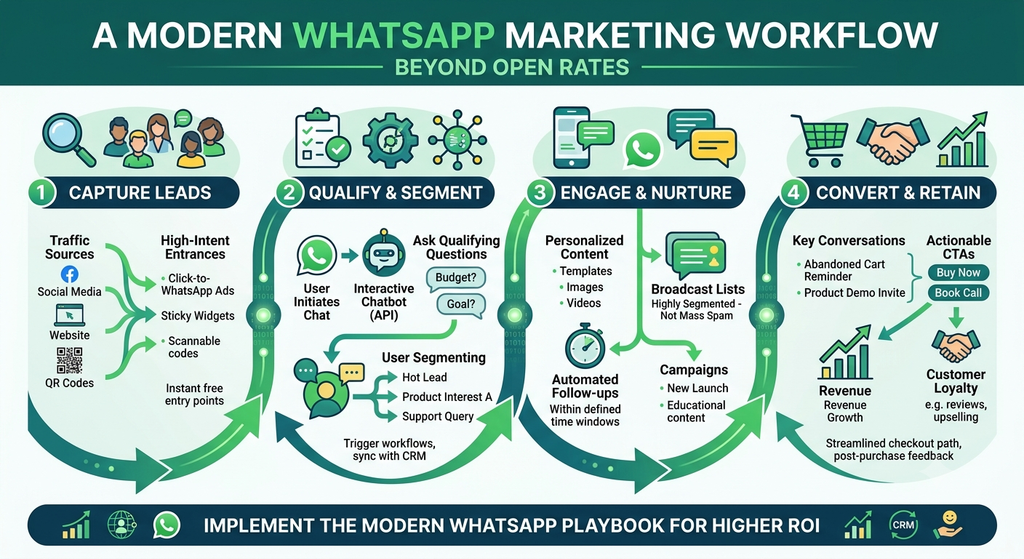
With standard email open rates hovering around $20\%$, businesses are battling a wave of inbox fatigue. WhatsApp, on the other hand, boasts open rates consistently above $90\%$ and response rates averaging $30\text{–}40\%$. However, treats like a high open rate also mean higher stakes. Spamming users on their primary personal chat application leads to blocked accounts and negative brand perception. Converting WhatsApp into a high-ROI revenue channel requires moving away from generic broadcasting and building a conversational lifecycle. 1. Capture High-Intent Leads A successful strategy begins before a single message is sent. Rather than collecting passive phone numbers via pop-ups, focus on high-intent entry points where users want to open a chat: 2. Automate Lead Qualification with Hybrid Workflows The first five minutes after an inquiry determine whether a lead converts. Deploy a hybrid automation model using the WhatsApp Business API: Automate Business 3. Master Hyper-Segmented Broadcasts Broadcasting a single promotional blast to your entire contact database lowers message quality scores, which risks account throttling. Divide your list based on transactional behavior: Zoko Audience Segment Trigger Event Content Strategy Cart Abandoners Items left in cart > 1 hour Send a dynamic template with the exact item image, a limited-time incentive, and a “Checkout Now” button. Post-Purchase Order delivered Provide a quick video tutorial on product setup, followed by an automated review request 5 days later. Lapsed Buyers No activity > 60 days Deliver a targeted restock notification or product recommendations based on past purchase history. 4. Key Metrics to Track (Beyond Open Rate) While high deliverability is a baseline benefit, track business-level performance to gauge ROI:

Beyond Open Rates: The Modern WhatsApp Marketing Playbook Read More »

Organic SEO vs. Paid Ads: Which One Does Your Business Need Right Now?

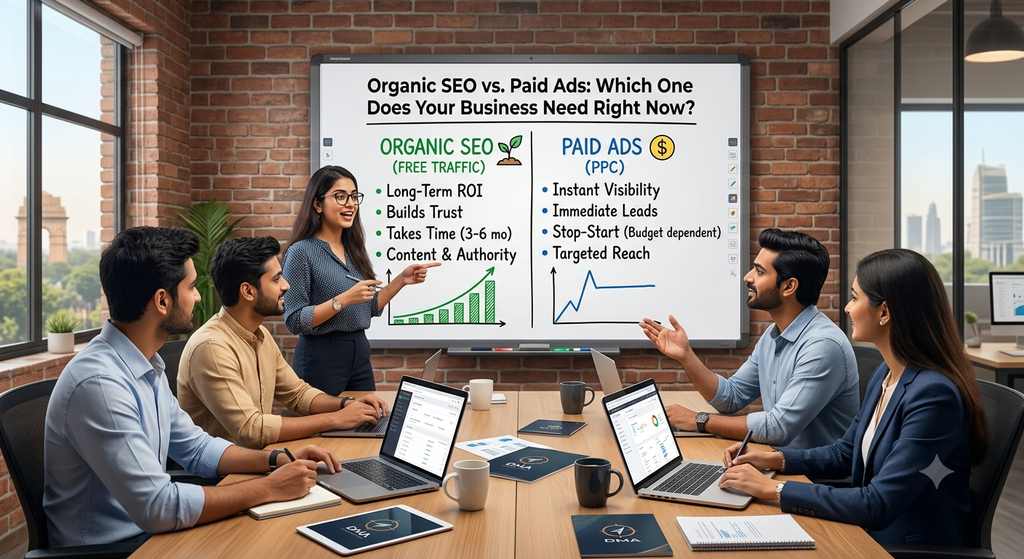
Every business owner reaching out to a digital marketing agency asks the same fundamental question: “Should I invest in SEO or run Paid Ads?” It is a fair question. With marketing budgets on the line, choosing the right strategy determines how quickly—and sustainably—your business grows. But the truth is, there is no one-size-fits-all answer. Whether you should choose Organic SEO or Paid Ads (PPC) depends entirely on your business goals, budget, and timeline. In this guide, we break down how both channels work, their pros and cons, and how to decide which one your business needs right now. Understanding Organic SEO Search Engine Optimization (SEO) is the process of optimizing your website to rank higher in unpaid, organic search results on engines like Google. When someone searches for “best dental clinic near me” or “how to improve ecommerce sales,” SEO ensures your business appears naturally at the top. The Pros of Organic SEO The Cons of Organic SEO Understanding Paid Ads (PPC) Paid Advertising—such as Google Search Ads, Meta Ads (Facebook & Instagram), or LinkedIn Ads—allows you to pay for immediate visibility. You bid on target keywords or audience demographics, and your ads appear at the top of search results or social media feeds. The Pros of Paid Ads The Cons of Paid Ads Head-to-Head Comparison Feature Organic SEO Paid Ads (PPC) Speed to Results Slow (3–6+ months) Instant (Hours to days) Upfront Cost Moderate (Strategy & Creation) High (Ad Spend + Management) Long-Term Value Very High (Compounding Growth) Low (Dependent on budget) Trust Factor High (Earned authority) Moderate (Recognized as sponsored) Audience Targeting Intent-based (Keywords) Intent & Demographic-based Which One Does Your Business Need Right Now? To decide where to allocate your marketing budget today, look at your primary goal: Choose Paid Ads if: Choose Organic SEO if: The Hybrid Approach: Why Not Both? If your budget allows, the ultimate growth strategy is combining both:

Organic SEO vs. Paid Ads: Which One Does Your Business Need Right Now? Read More »

LOCAL SEO VS GOOGLE ADS

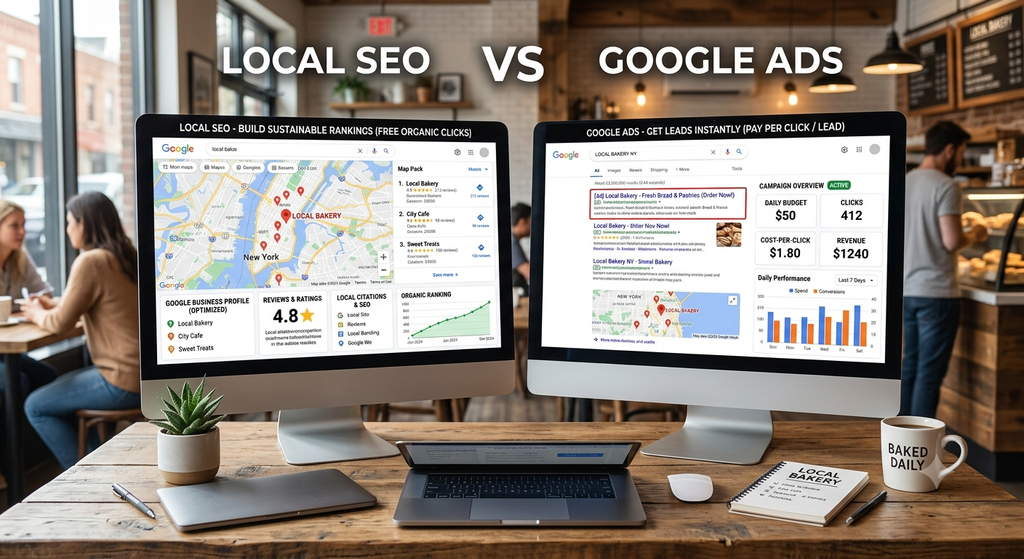
If you need phone calls today, Google Ads wins. If you want to build a sustainable, dominant market presence where you stop paying for every single click, Local SEO wins long-term. Here is a side-by-side comparison to help you choose the right path for your business. Head-to-Head Comparison Feature Local SEO (Google Maps & Organic) Google Ads (PPC & Local Services Ads) Time to First Lead 3 to 6 months 24 to 48 hours Cost Model Time or monthly agency fee (clicks are free) Pay-per-click or pay-per-lead Trust & Click Rate High (70%+ of clicks go to organic/Map Pack) Moderate (Ad label causes some users to skip) Longevity Compounding asset (rankings persist if paused) Rent-based (leads stop the moment spend stops) Best For Long-term margin growth and local dominance Immediate revenue, new launches, seasonal pushes When Google Ads Actually Delivers When Local SEO Actually Delivers The Verdict for Small Businesses If you have a strict short-term requirement for leads and a daily ad budget ready to spend, start with Google Ads. If you are looking to build a multi-year brand that drives organic calls on autopilot, prioritize Local SEO. For most established local businesses, the most effective approach combines both: run Google Local Services Ads for instant emergency calls while actively optimizing your Google Business Profile and local citation network to capture long-term organic map traffic.

LOCAL SEO VS GOOGLE ADS Read More »

what is digital marketing

What is Digital Marketing

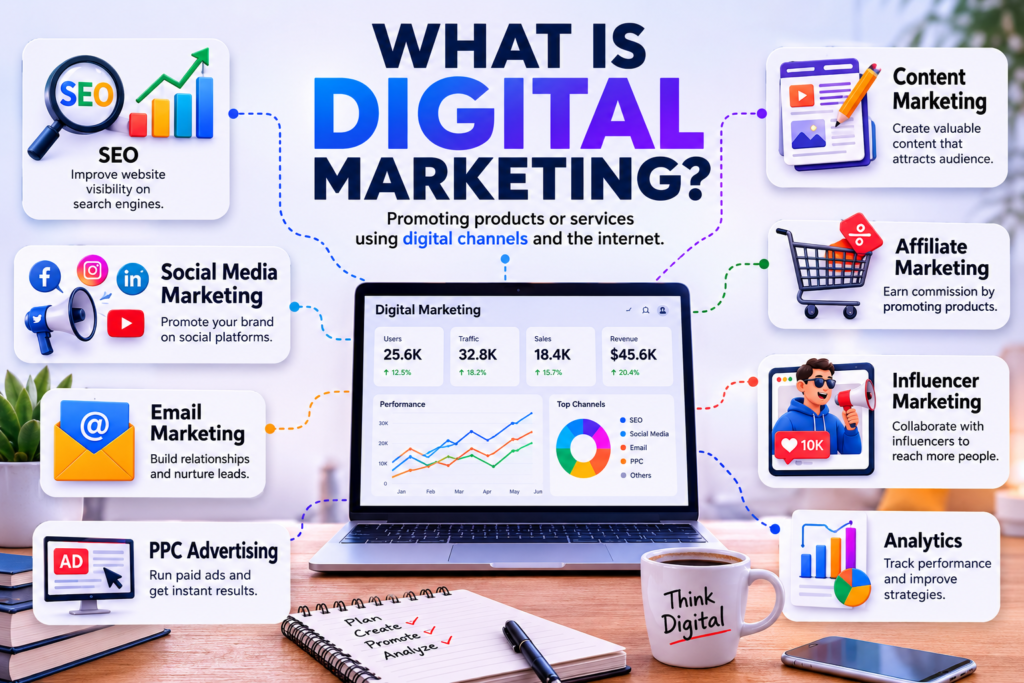
What Is Digital Marketing? So, what is digital marketing in simple words? Digital marketing is the process of promoting products, services, brands, or businesses through the internet and digital technologies. Traditional marketing uses channels such as television, newspapers, radio, magazines, and billboards. Digital marketing, on the other hand, uses online channels such as search engines, websites, social media platforms, email, YouTube, and online advertising. For example, when you search for a product on Google and see an advertisement, that is digital marketing. Similarly, when you see a brand promoting its products on Instagram, YouTube, or Facebook, it is also an example of digital marketing. Why Is Digital Marketing Important? Now that we understand what is digital marketing, let’s look at why it is important for businesses. Today, consumers use the internet to search for information, compare products, read reviews, watch videos, and make purchases. This makes digital platforms a powerful way for businesses to connect with their target audience. Some important benefits of digital marketing include: Reaching a large and targeted audience Increasing brand awareness Generating leads and website traffic Improving customer engagement Increasing sales and revenue Measuring marketing performance Building long-term customer relationships Another major advantage is that businesses can track their results and understand which campaigns are performing well. Types of Digital Marketing Digital marketing is not a single activity. It includes several different strategies and channels. Let’s understand some of the most popular types. 1. Search Engine Optimization (SEO) SEO stands for Search Engine Optimization. It is the process of optimizing a website and its content so that it can rank higher in search engine results. For example, if someone searches for “what is digital marketing” on Google, websites with useful, relevant, and well-optimized content may appear in the search results. SEO includes keyword research, content optimization, technical SEO, link building, and improving website performance. It is one of the most valuable skills for anyone who wants to build a career in digital marketing. 2. Content Marketing Content marketing involves creating useful and valuable content to attract and engage a target audience. This content can include blog posts, videos, social media posts, podcasts, infographics, guides, and tutorials. For example, an article explaining what is digital marketing is a form of content marketing because it provides information to people who are interested in the topic. The goal is to create content that answers questions, solves problems, builds trust, and eventually encourages customers to take action. 3. Social Media Marketing Social Media Marketing, or SMM, involves promoting a business or brand through social media platforms such as Facebook, Instagram, YouTube, LinkedIn, and X. Businesses use social media to share content, communicate with customers, build communities, generate leads, and promote products and services. A clothing brand, for example, can use Instagram to showcase its latest collection and reach potential customers. 4. Email Marketing Email marketing involves communicating with existing and potential customers through email. Businesses can use email marketing to send newsletters, product updates, special offers, educational content, and promotional messages. It is particularly useful for building long-term relationships with customers and encouraging repeat purchases. 5. PPC Advertising PPC stands for Pay-Per-Click. It is a form of online advertising where businesses generally pay when users click on their advertisements. Google Ads is one of the most popular examples of PPC advertising. When you search for a product or service on Google, you may see sponsored advertisements at the top of the results. PPC can help businesses generate traffic, leads, and sales quickly when campaigns are properly planned and optimized. 6. Affiliate Marketing Affiliate marketing is another popular part of digital marketing. In this model, you promote another company’s products or services through a unique affiliate link. When someone purchases a product through your affiliate link, you may receive a commission. You may have seen YouTubers reviewing products and adding affiliate links in their video descriptions. This allows creators to earn money when their audience makes qualifying purchases. How Can You Learn Digital Marketing? After understanding what is digital marketing, the next question is how you can learn it. Learn Through YouTube YouTube is a great place to start because there are thousands of free tutorials covering SEO, social media marketing, content marketing, paid advertising, blogging, and affiliate marketing. Join an Online Course An online course can provide a structured learning path. Instead of learning random topics, you can learn digital marketing step by step and understand how different strategies work together. Join an Offline Institute You can also join an offline institute. However, offline courses can be more expensive, and the quality of training can vary. Always check the curriculum, trainers, reviews, and practical training before enrolling. How Much Can You Earn in Digital Marketing? One of the most common questions after learning what is digital marketing is about income. In India, digital marketing salaries depend on experience, skills, specialization, location, and company. A fresher may earn around ₹2–4 lakh per year, while professionals with 3–5 years of experience may earn around ₹6–10 lakh per year. Professionals with more than five years of experience can potentially earn ₹10–20 lakh per year or more. Freelancing, consulting, agency work, affiliate marketing, and online businesses can provide additional earning opportunities. Conclusion So, what is digital marketing? In simple terms, it is the process of using the internet and digital channels to promote products, services, brands, and businesses. SEO, content marketing, social media marketing, email marketing, PPC, and affiliate marketing are some of the major areas of this field. Digital marketing is continuously evolving, so learning should never stop. If you are interested in marketing, technology, content creation, or online business, learning digital marketing can be a valuable investment in your career. Now that you understand what is digital marketing, choose one area, start learning, practice your skills, and work on real-world projects to build your expertise.


What is Digital Marketing Read More »